
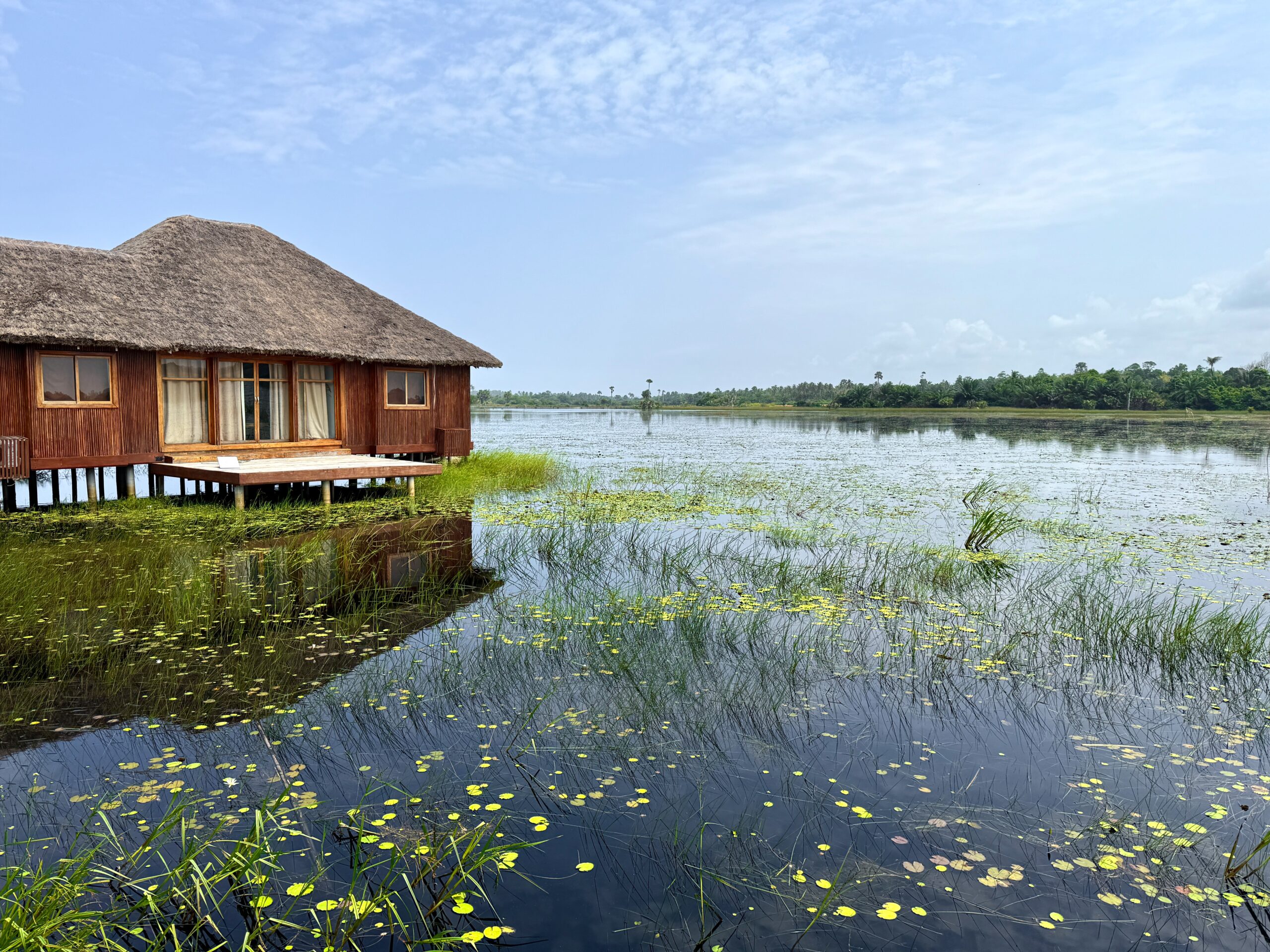
When we weren’t visiting historical sites, we were able to visit different communities around the country. One village, Nzulezu, sat on stilts over the water. The community was made up of a historically persecuted group that could only find safety by living on the lake. By creating a new home on the water, the people were able to escape the conflict that pushed them into the region. The community was only accessible by boat, so we took canoes out to it. We had to ride through a dense marsh to reach the lake that the village sat on. Once we escaped the brush, we saw Nzulezu sticking out in the middle of the water. Children played soccer on a large raft, as others dove off into the water. Women worked small farms along the banks, while men could be seen balancing on small skiffs, fishing near reeds and embankments. The village even boasted a school and several churches. Another village we were able to stop over was outside Larabanga in the savannah region. The people were able to live in a more traditional lifestyle while also making money for the community through an artisanal shea butter collective. Everyone in the community is required to contribute to the shea operation, which provides money for village services. The village was surrounded by shea orchards and a national park home to stunning elephants, which also provided income. Across Ghana, people live in a variety of traditional, modern, and syncretic ways, adapting to the rapidly changing world around them.